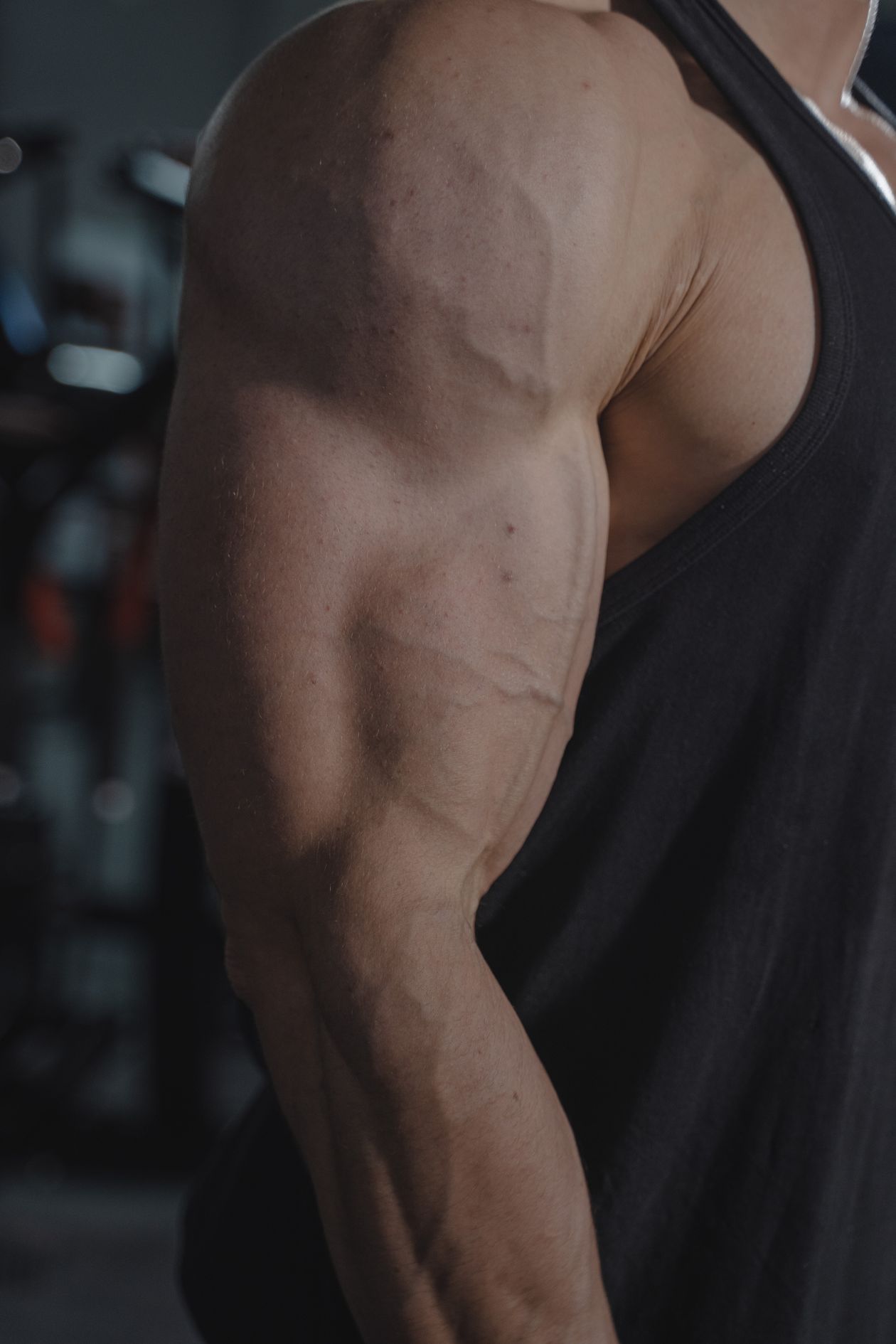
Here's a number that surprises people: your triceps make up about two-thirds of your upper arm. Not your biceps — your triceps. If you want bigger arms, the back of your arm is where the real estate is. And yet most guys spend twice as much time on curls.
The other thing most people get wrong? Treating the triceps like one muscle. It's not. It's three muscles fused at the elbow — the long head, the lateral head, and the medial head — and each one responds to different arm positions and different exercises. Hit all three properly and your arms grow. Hammer the same pushdowns every session and you're only working a third of the equation.
Wait — Triceps Matter More Than Biceps for Arm Size?
Yeah, and it's not close.
Think about it from a visual standpoint too. When you're wearing a t-shirt, what's visible from most angles? The back and sides of your arm — that's all triceps. The bicep only pops from the front when you flex. The triceps are what make your arms look full and developed from every angle, whether you're flexing or just reaching for your coffee.
This isn't to say skip bicep training. But if your arms aren't growing and you're already doing plenty of curls, the answer is almost always more intelligent triceps work.
The Three Heads — What They Are and Why It Matters
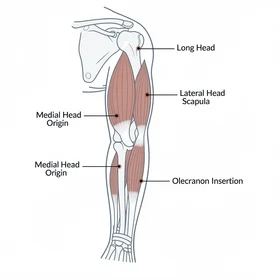
All three heads of the triceps share one job: extending your elbow (straightening your arm). They all attach to the same tendon at the elbow. But they originate from different spots, which means different arm positions load them differently.
| Head | Where It Starts | Where You See It | What Makes It Unique |
|---|---|---|---|
| Long Head | Shoulder blade (scapula) | Inner/back of upper arm — the thick mass | Only head that crosses the shoulder joint. Gets stretched when arms go overhead. |
| Lateral Head | Upper arm bone (humerus), outside | Outer arm — the "horseshoe" shape | Kicks in hardest during heavy loads. Gives that outer arm sweep. |
| Medial Head | Upper arm bone (humerus), inside | Deep — sits underneath the other two | Works in every tricep movement. The quiet workhorse you can't see. |
Here's the practical takeaway from all that anatomy: your arm position relative to your body determines which head does the heavy lifting.
- Arms overhead or behind you → long head is stretched and working hardest
- Arms at your sides, pushing heavy → lateral head takes the load
- Any elbow extension, especially at full lockout → medial head is always contributing
That's really it. You don't need a PhD in anatomy to train triceps well. You just need to make sure your weekly training includes at least one movement with your arms overhead, one heavy pressing movement, and one that goes to full lockout with control.
How Hard Each Head Works (and Why You're Probably Imbalanced)
EMG studies have measured how much each head activates during common exercises. The numbers are interesting — and they explain why most guys have overdeveloped lateral heads and underdeveloped long heads.
Notice the pattern? The exercises most people default to — pushdowns and dips — barely touch the long head. And the long head is the biggest of the three. It's like training legs but only doing leg extensions and never squatting.
The Long Head — Your Biggest Growth Opportunity
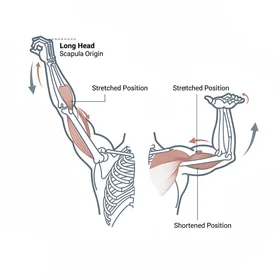
The long head is special because it's the only one that crosses the shoulder joint. It attaches to your shoulder blade, not your upper arm bone. That means shoulder position completely changes how hard it works.
When your arms are overhead, the long head gets stretched to its full length. Muscles generate more force when stretched — this is called the length-tension relationship, and recent research on stretch-mediated hypertrophy suggests that training a muscle in its lengthened position may actually produce more growth than training it at shorter lengths (Maeo et al., Med Sci Sports Exerc, 2022).
Translation: overhead triceps work isn't just "another option." It might be the single most effective way to grow your triceps, period.
Best Long Head Exercises
Overhead Cable Tricep Extension — Face away from a cable stack, arms overhead, rope handle. Let the weight stretch your triceps fully at the bottom, then extend. This is the money movement. The cable keeps tension constant through the full range, and the overhead position loads the long head from start to finish.
Incline Dumbbell Skull Crushers — Set a bench to 30-45°. The incline puts your arms in a semi-overhead position, which means the long head is stretched more than flat skull crushers. Let the dumbbells drift slightly behind your forehead at the bottom — that's where the long head stretch peaks.
Single-Arm Overhead Dumbbell Extension — One arm at a time, dumbbell behind your head. You get a great stretch, and the single-arm version lets you focus on the mind-muscle connection. Brace your core and don't let your elbow drift forward.
The Lateral Head — The Horseshoe
This is what most people think of when they picture impressive triceps — that horseshoe shape on the outside of the arm. The lateral head responds best to heavy loads with your arms at your sides. Good news: if you're already doing heavy pressing, you're hitting it. But isolation work finishes the job.
Best Lateral Head Exercises
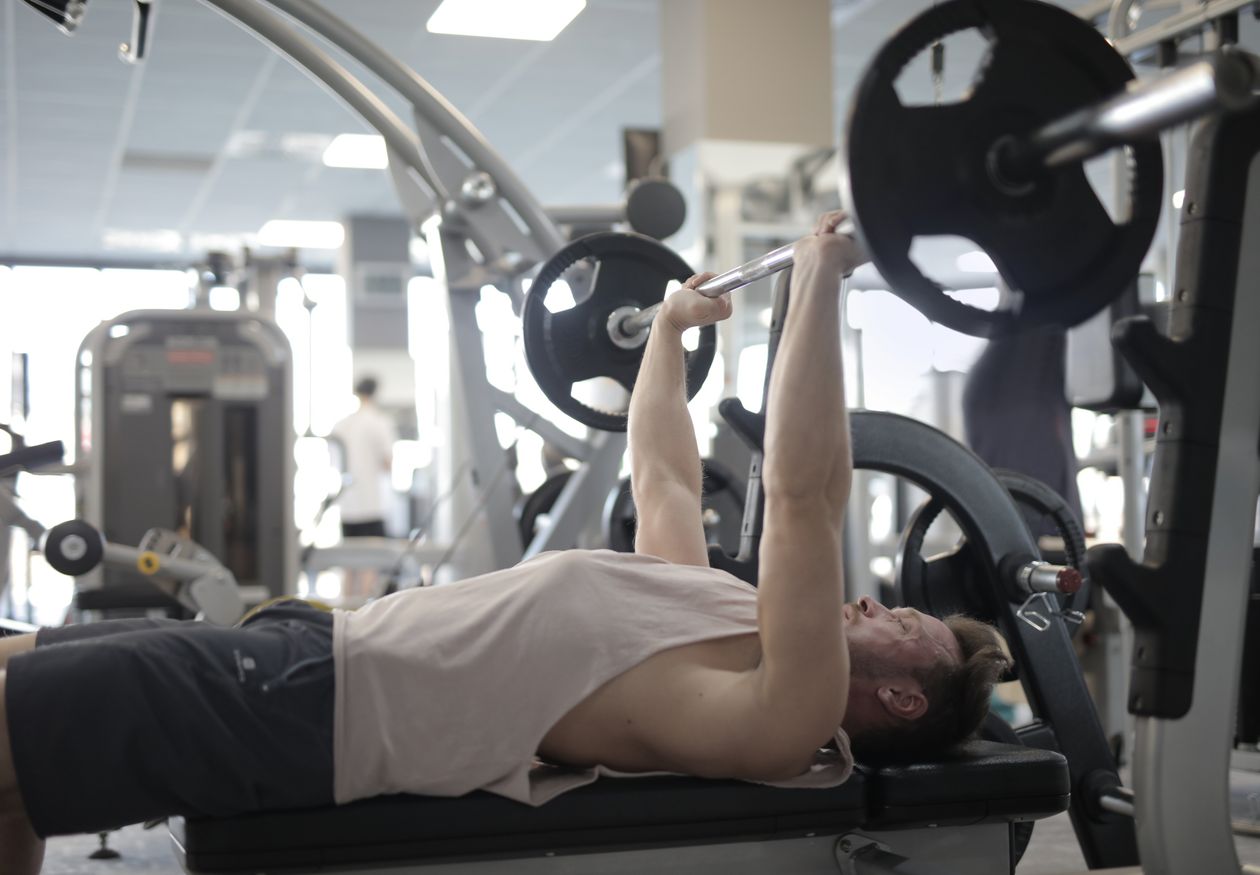
Close-Grip Bench Press — Hands about shoulder-width apart (not so close that your wrists hurt). Elbows tucked, lower to mid-chest, press up. This is the heaviest triceps exercise you can do, and the lateral head loves heavy. 4 sets of 6-8 reps and you're done.
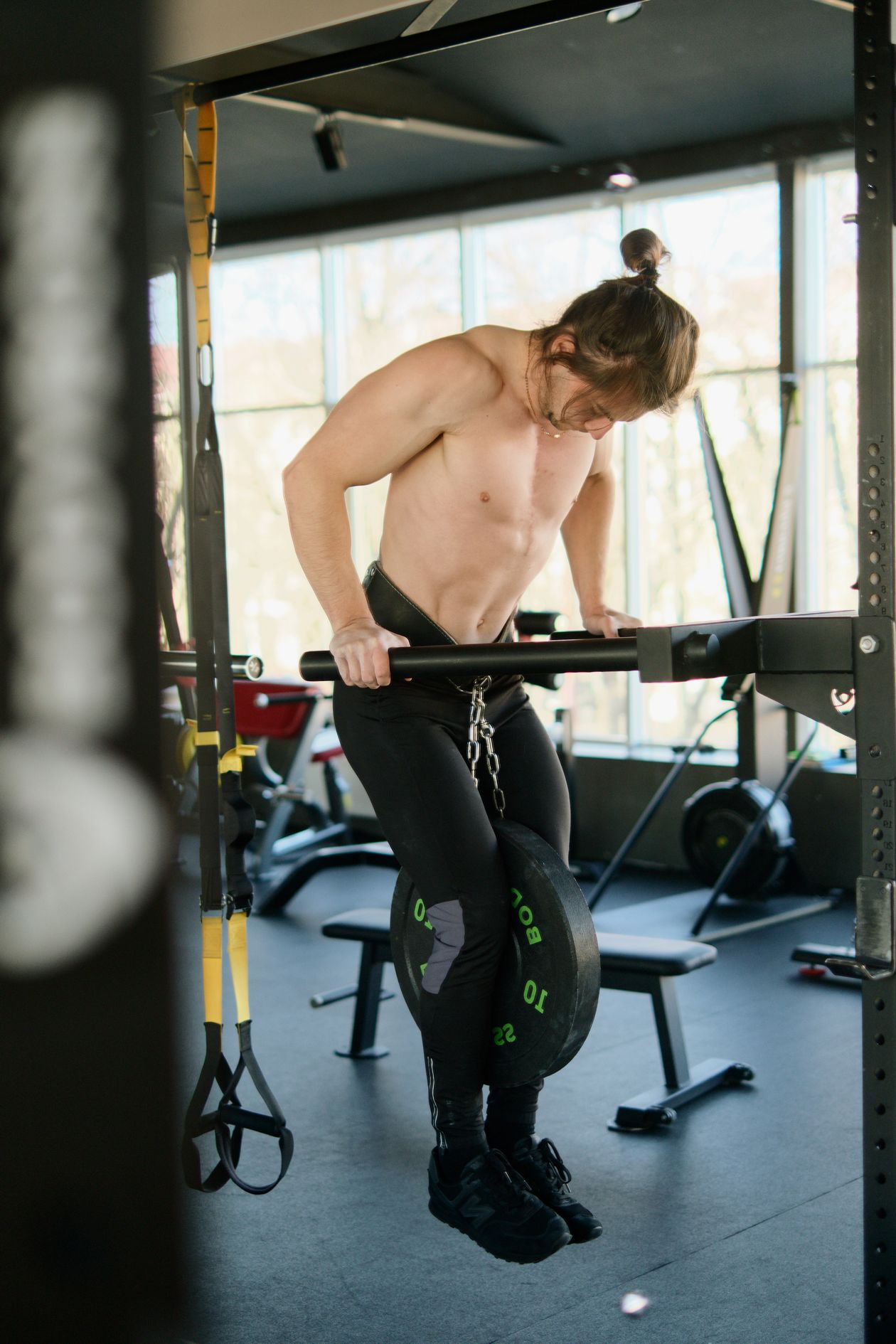
Weighted Dips — Stay relatively upright to keep the emphasis on triceps rather than chest. Add weight with a belt once bodyweight becomes easy. This is a compound movement that hits the lateral head hard while also building overall pressing strength.
V-Bar Pushdowns — The classic. Elbows pinned to your sides, squeeze at the bottom. Keep the movement strict — if you're leaning over the cable, the weight is too heavy. The lateral head does its best work here when you're controlled and deliberate.
The Medial Head — The One Everyone Ignores
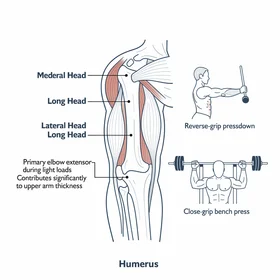
You can't really see the medial head — it sits deep underneath the long and lateral heads. Which is probably why most training articles give it two sentences and move on. That's a mistake.
The medial head is active in every single tricep movement. It's the stabilizer that lets the other two heads do their jobs. It's especially important at full elbow lockout, which is where a lot of guys cut their reps short. And here's the thing: underdeveloped medial heads contribute to elbow pain and tendon issues, especially in lifters over 30 who've been benching heavy for years.
Best Medial Head Exercises
Reverse-Grip Pushdowns — Palms facing up on a straight bar. This feels weird at first, but the supinated grip shifts emphasis from the lateral to the medial head. Use lighter weight than your normal pushdowns and focus on a full, controlled lockout at the bottom.
Diamond Push-Ups — Hands together in a diamond shape under your chest. Research shows this produces some of the highest overall tricep activation of any bodyweight exercise (Cogley et al., J Strength Cond Res, 2005). The narrow hand position and full lockout at the top preferentially load the medial head.
Cable Kickbacks — Single arm, cable attachment. The cable provides constant tension through the full range, unlike dumbbell kickbacks where the resistance drops at the bottom. Focus on the squeeze at full extension — that last 20% of the range is all medial head.
Putting It All Together — Complete Workouts
Here's the thing about triceps programming that nobody seems to talk about: you don't need the same workout forever. What you need changes based on how long you've been training. A beginner doesn't need the same volume as someone who's been lifting for a decade.
If You've Been Training Under 2 Years
| Exercise | Head Focus | Sets x Reps | Rest | Form Cue |
|---|---|---|---|---|
| Close-Grip Bench Press | Lateral + overall | 3 x 8-10 | 2 min | Hands shoulder width, elbows tight |
| Overhead Cable Extension | Long head | 3 x 12-15 | 90 sec | Full stretch at bottom, squeeze at top |
| Reverse-Grip Pushdowns | Medial head | 2 x 12-15 | 60 sec | Full lockout, slow negative |
If You've Been Training 2+ Years
| Exercise | Head Focus | Sets x Reps | Rest | Form Cue |
|---|---|---|---|---|
| Close-Grip Bench Press | Lateral + overall | 4 x 6-8 | 2-3 min | Progressive overload — add weight weekly |
| Incline Skull Crushers | Long head (stretched) | 3 x 10-12 | 90 sec | Drift behind forehead, feel the stretch |
| V-Bar Pushdowns | Lateral head | 3 x 10-12 | 60 sec | Elbows pinned, strict form |
| Reverse-Grip Pushdowns | Medial head | 3 x 12-15 | 60 sec | Full lockout every rep |
If You've Been Training 5+ Years (and Arms Are a Weak Point)
| Exercise | Head Focus | Sets x Reps | Rest | Notes |
|---|---|---|---|---|
| Weighted Dips | Lateral + overall | 4 x 6-8 | 2-3 min | Add weight via belt, stay upright |
| Overhead Cable Extension | Long head (stretched) | 4 x 10-12 | 90 sec | Pause 1 sec at full stretch |
| Close-Grip Floor Press | Lateral head (lockout) | 3 x 8-10 | 2 min | Dead stop at bottom eliminates bounce |
| Cable Kickbacks | Medial + long | 3 x 15-20 | 45 sec | Constant tension, squeeze at top |
| Diamond Push-Ups (burnout) | Medial + overall | 2 x AMRAP | — | Last exercise, empty the tank |
Progression — How to Actually Get Stronger Over Time
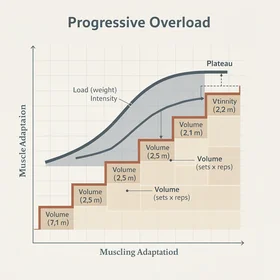
This is where most triceps articles stop. They give you exercises, maybe a workout, and call it a day. But exercises alone don't build muscle — progressive overload does. Here's how to think about it:
- Compound movements (close-grip bench, dips): Add 2.5-5 lbs when you can complete all sets at the top of the rep range. This is the primary driver of triceps growth.
- Isolation movements (extensions, pushdowns): Don't chase weight here. When you hit the top of the rep range with clean form, bump up by the smallest increment available. If form breaks down, drop back.
- When you stall: Before adding sets or exercises, try manipulating tempo. A 3-second negative on overhead extensions will humble you at weights you thought were easy.
Common Mistakes (and the Elbow Pain Thing)
Let's talk about the stuff that actually goes wrong in practice.
Skipping overhead work entirely. This is the big one. Most guys default to pushdowns and dips because that's what's comfortable and what they see everyone else doing. But the long head — the biggest of the three — gets minimal stimulation without overhead arm positions. If you take one thing from this article: add one overhead tricep movement to your routine.
Elbow flare on pressing. On close-grip bench, dips, and extensions, your elbows should track alongside your body, not splay outward. Flaring turns a tricep movement into a shoulder exercise and puts stress on the elbow joint in a way it wasn't designed for.
Cutting range of motion short. Especially on pushdowns — a lot of guys stop a few inches before full lockout. Those last degrees of extension are exactly where the medial head contributes most. If you're not locking out, you're skipping the medial head.
Too many exercises, too little intensity. You don't need seven different tricep exercises in one session. You need 2-4 movements that cover all three heads, performed with real effort. Three hard sets of overhead extensions do more than six lazy sets spread across three random machines.
About Elbow Pain
If you're over 30 and you've been pressing heavy for years, you probably know what tricep tendonitis feels like. That nagging pain on the inside of your elbow, especially during skull crushers or heavy dips. A few things help:
- Warm up with 2-3 light, high-rep sets of pushdowns before heavy work
- Swap barbell skull crushers for dumbbell or cable versions — fixed barbells lock your wrists into a position that some elbows don't tolerate well
- Don't skip the medial head — it stabilizes the elbow joint, and stronger stabilizers mean less tendon stress
- If pain persists, take a deload week and focus on lighter, higher-rep work. Tendons heal slower than muscles.
For the recovery side of things, peptide therapy (specifically BPC-157) is showing promise for tendon healing in preclinical research. Worth reading about if you deal with chronic elbow issues.
How This Fits Into Your Week
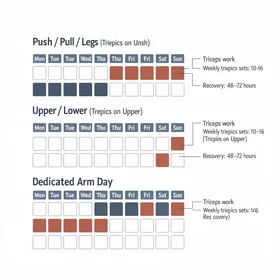
You don't need a dedicated "arm day" to train triceps well (though you can do that if arms are a priority). Here are three ways to fit complete triceps training into a normal split:
- Push/Pull/Legs
- Triceps get hit on push day after chest and shoulder pressing. Add 2-3 sets of direct tricep work — one overhead, one pushdown or reverse grip. The pressing already pre-fatigues them, so you don't need much volume.
- Upper/Lower Split
- Same idea. Triceps at the end of upper day, 3-4 sets covering different heads. If running upper body twice per week, use different exercises on each day.
- Dedicated Arm Day
- If arms are lagging, a separate day lets you hit triceps fresh with full energy. Run the intermediate or advanced workout above, paired with bicep work.
Whatever split you use, the key is making sure you're covering all three heads across the week. One overhead movement, one heavy press or pushdown, one medial-focused movement. That's the minimum effective dose.
One more thing worth mentioning if you're over 30: training is the stimulus, but growth happens during recovery. Sleep, nutrition, and stress management matter as much as what you do in the gym. If you're doing everything right with your triceps training and still stalling, the testosterone guide covers the other half of the equation.